

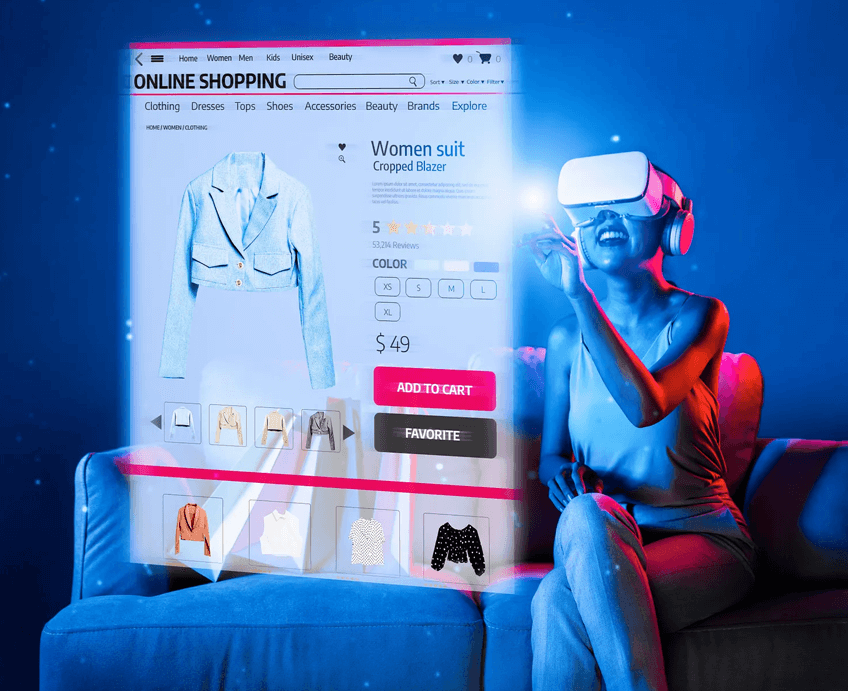
Revolutionizing E-Commerce: The Role of AR and VR in Transforming Online Shopping
In the ever-evolving landscape of e-commerce, Augmented Reality (AR) and Virtual Reality (VR) are rewriting the rules of engagement. These cutting-edge technologies are turning passive shopping experiences into immersive adventures, bridging the gap between the physical and digital worlds. Let’s explore how AR and VR are reshaping e-commerce and creating value for businesses and consumers alike.
What Are AR and VR?

- Augmented Reality (AR): Enhances the real world environment by overlaying digital information like images, sounds, and other sensory stimuli.
- Virtual Reality (VR): Creates a completely immersive digital environment where users can interact with 3D spaces using VR headsets or compatible devices.
Together, AR and VR offer experiences that are interactive, realistic, and engaging, making them ideal tools for the e-commerce industry.
How AR and VR Enhance Online Shopping
- Try Before You Buy AR enables customers to virtually “try on” clothes, accessories, or even makeup, reducing the uncertainty of online purchases. IKEA’s AR app, for instance, allows users to visualize furniture in their own homes before making a purchase.
- Immersive Product Demonstrations VR allows shoppers to explore virtual showrooms or interact with 3D product models. Automotive brands like Tesla use VR to offer virtual test drives, enhancing customer engagement.
- Enhanced Personalization AR-powered apps can analyze user preferences to recommend products tailored to individual tastes. This creates a more personalized and satisfying shopping experience.
- Virtual Storefronts VR technology transforms traditional online stores into immersive virtual environments where customers can “walk through” aisles, view products up close, and interact with store representatives in real time.
Benefits of AR and VR in E_Commerce

- Increased Customer Confidence: Shoppers are more likely to complete purchases when they feel confident about their choices.
- Reduced Returns: By offering a realistic preview of products, AR and VR help reduce return rates.
- Enhanced Brand Loyalty: Unique and engaging experiences build stronger connections between brands and customers.
- Higher Conversion Rates: Interactive tools lead to better customer decision-making, increasing sales.
Challenges and Opportunities
While the potential of AR and VR in e_commerce is immense, there are challenges such as high implementation costs, technological barriers, and user accessibility. However, as technology becomes more affordable and widespread, these hurdles are expected to diminish.
Future Trends to Watch in AR and VR E_Commerce
AR Shopping in Social Media Platforms like Instagram and Snapchat are leading the charge in integrating AR tools directly into their apps. For instance:
- Instagram’s AR Ads: Allow users to try on sunglasses, makeup, or even shoes directly through an interactive ad before purchasing.
- Snapchat’s AR Lenses: Retailers like Gucci and Adidas use Snapchat lenses to let users virtually try on products. These features offer seamless in-app shopping experiences, reducing friction between product discovery and purchase, while making shopping feel more personalized and engaging.

AI-Driven AR and VR The integration of AI with AR and VR is unlocking new possibilities for smarter, more intuitive shopping experiences:
- AI Recommendations in AR Apps: AI can analyze a user’s preferences and behavior to suggest the most suitable products. For example, an AR-powered app might suggest the best-fitting furniture for your room based on its dimensions and your aesthetic preferences.
- Smart Virtual Shopping Assistants: These AI assistants, when combined with AR/VR, provide instant product details, personalized offers, and real-time support in virtual environments.
- Voice Activated Commands: Integrating AI voice assistants like Siri or Alexa in AR/VR setups allows for hands-free navigation and purchasing.

Haptic Feedback in VR One of the biggest challenges in online shopping is the inability to touch or feel products. Haptic feedback technology is addressing this gap by adding tactile sensations to virtual environments:
- Feel the Texture of Products: Advanced VR gloves or controllers simulate the texture and weight of items, making virtual shopping more realistic.
- Enhanced Interactivity: Retailers can let customers “experience” products such as testing the softness of a pillow or the grip of a tool. While still in its infancy, haptic feedback in VR is a game-changer for industries like fashion, furniture, and automotive.
Augmented Reality Mirrors AR mirrors are emerging as a popular trend in brick-and-mortar stores and virtual platforms. They allow customers to:
- Virtually try on clothing or accessories without physically changing.
- Preview haircuts, makeup looks, or even glasses in real-time.
- Retailers like Sephora and Nike are already leveraging this technology to enhance the customer experience.

Cross-Platform Integration The future of AR/VR shopping lies in its ability to integrate across platforms seamlessly:
- Omnichannel Shopping: Customers can start their shopping journey in a virtual store using a VR headset and continue on their mobile app or desktop with synchronized data.
- AR in Wearables: Smart glasses equipped with AR features could allow users to shop online while simultaneously interacting with the real world.
0 Comments
No comments yet.